

In a world where streaming has become the new normal, more people are searching for flexible and affordable ways to watch live TV, movies, and international content. That search often leads to IPTV.
But one question appears more than any other:
Is IPTV legal?
If you’ve ever asked this, you’re not alone. With thousands of IPTV services online, some legitimate, others questionable, it’s normal to feel confused or even worried about using the wrong type of provider. The last thing you want is to violate copyright laws or expose your personal data.
The good news?
You can absolutely use IPTV legally… if you understand how it works and how to choose the right type of provider.
If you’re still new to the topic, you can learn what IPTV really is in our beginner-friendly guide that explains how the technology works.
This guide breaks down everything clearly and safely, covering IPTV laws in the US, UK, EU, and Middle East, the difference between legal and illegal IPTV, how to use IPTV responsibly, and how to choose a trustworthy service.
This is NOT legal advice, just a simplified explanation to help you stay informed in 2025.
Table of Contents
Legal IPTV vs Unlicensed IPTV: Understanding the Difference
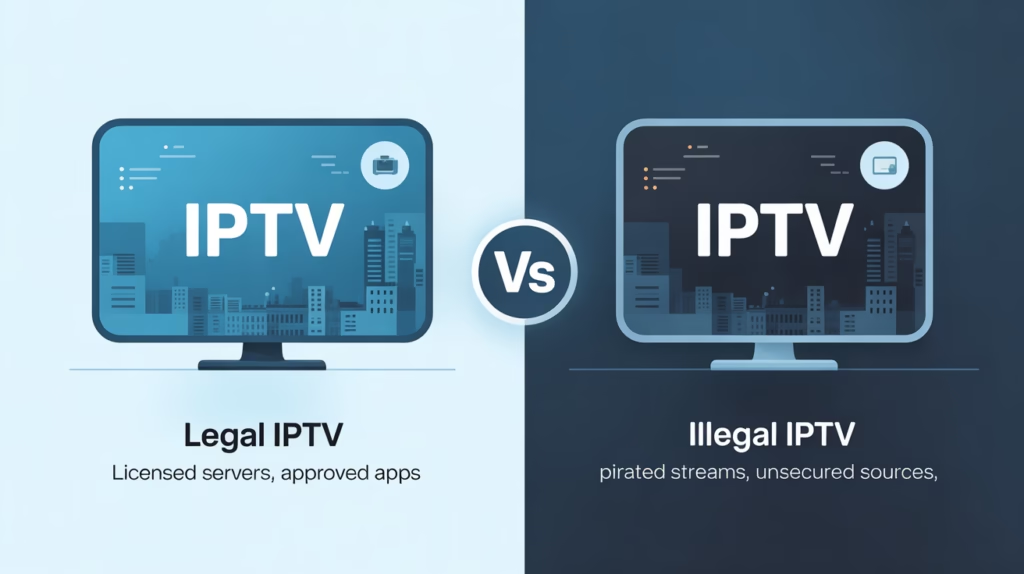
Before you understand whether is IPTV legal in your country, you must know the difference between a legitimate IPTV provider and an unauthorized one. The legality depends on where the streams come from.
1. Content Licensing : The Core Difference
Legal IPTV services purchase the rights to broadcast content.
Illegal IPTV services redistribute content without permission.
Legal IPTV (Licensed):
- Pays for distribution rights
- Uses approved sources
- Complies with copyright law
- Operates publicly and transparently
Illegal IPTV (Unlicensed):
- Uses pirated streams or stolen feeds
- Bypasses copyright permission
- Offers premium channels at impossible prices
- Often hides servers and ownership
This is the main factor in determining is IPTV legal or not.
2. Server Locations & Infrastructure
Licensed IPTV providers use:
- Verified CDN networks
- Encrypted streaming
- Transparent bandwidth and server providers
Unlicensed IPTV providers often rely on:
- Hidden offshore servers
- Unsecured streams
- Constant shutdowns or domain changes
If the service seems unstable, suspiciously cheap, or constantly rebranding: avoid it.
3. Copyright Protection
Legal IPTV:
- Respects DMCA (US) and copyright law
- Pays for movies, sports, and channels
- Works with payment processors normally
Illegal IPTV:
- Violates copyright distribution rights
- Risks shutdowns or domain seizures
- Often avoids mainstream payment methods
If a service only accepts crypto, gift cards, or unusual payments, that’s a red flag. You can also review the official DMCA guidelines to understand how copyright protection applies to streaming services in the United States.
IPTV Laws by Region (US, UK, EU, Middle East)
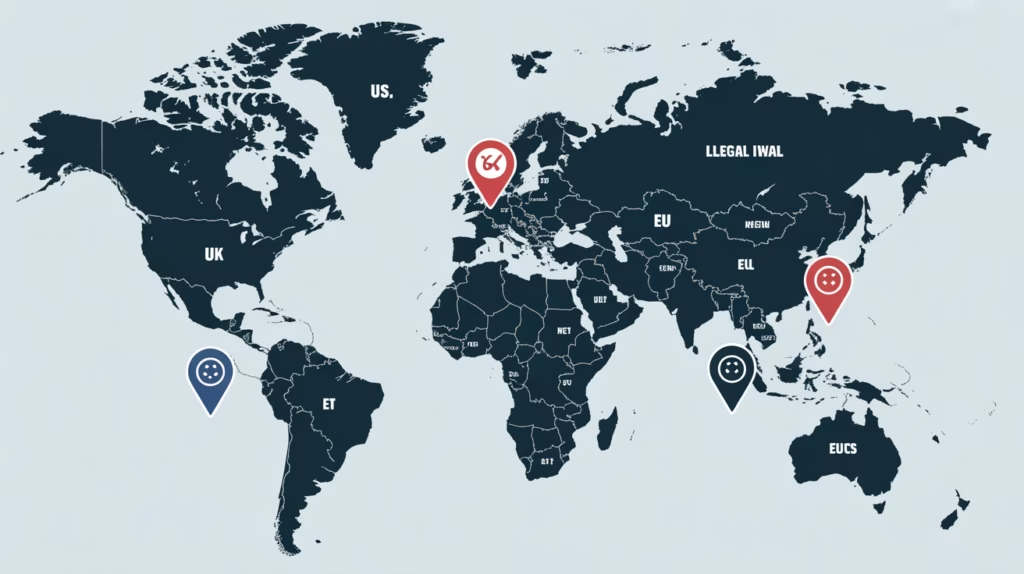
IPTV laws differ depending on where you live. Below is a general, easy-to-understand breakdown of how different regions treat IPTV legality.
(This is NOT legal advice, only simplified public information.)
United States
In the US, IPTV itself is 100% legal as long as the provider has the proper streaming rights.
✔ Legal:
- Licensed IPTV services
- Apps with official permissions (e.g., Sling TV, Hulu Live)
❌ Illegal:
- IPTV services streaming copyrighted channels without permission
- Services offering premium networks at unrealistic prices
- Restreaming copyrighted content
US law (DMCA) targets the provider, not the viewer but knowingly using illegal IPTV still carries legal risk.
To stay safe, choose legal IPTV providers with transparent licensing.
United Kingdom
UK copyright law is strict.
The question “is IPTV legal in the UK?” depends on the provider.
✔ Legal:
- Licensed IPTV services
- Apps from official stores
- Providers with clear copyright compliance
❌ Illegal:
- Services offering Sky, BT Sport, or premium channels without permission
- “Fully loaded boxes” with illegal apps
- Streams taken from unauthorized sources
UK courts have previously penalized illegal IPTV distributors.
End users rarely face penalties, but knowingly buying illegal services is still considered copyright infringement.
Europe (EU)
In Europe, IPTV legality varies by country, but copyright laws across the EU generally follow the same principle:
IPTV is legal as long as the provider has rights to the content.
✔ Legal IPTV providers operate transparently
✔ Illegal IPTV providers violate EU copyright directives
Some EU countries focus heavily on shutting down illegal servers rather than targeting viewers.
Middle East
In regions like UAE, Saudi Arabia, Qatar, and Kuwait, copyright laws are strict.
Many IPTV apps are blocked or restricted, especially those redistributing satellite channels illegally.
✔ Legal IPTV = allowed
❌ Pirated IPTV = banned in most regions
Always check local regulations, as rules can differ widely between countries.
How to Use IPTV Safely in 2025
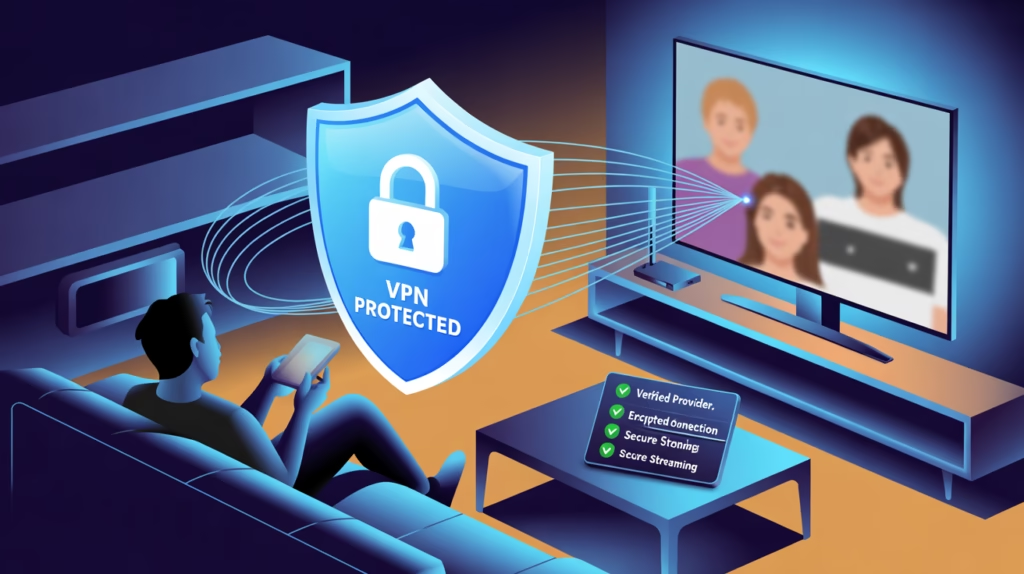
Even when IPTV is legal, you must use it responsibly.
1. Use a Trusted, Transparent Provider
A legal IPTV provider will always:
- Show clear pricing
- Offer professional support
- Provide stable servers
- Use safe apps
- Avoid stolen content
If you’re unsure whether a service is legitimate, ask about its content licensing.
2. Avoid Suspicious Apps or “Free IPTV” Sites
Free streaming apps are almost always illegal and risky.
Risks include:
- Malware
- Data theft
- Unsafe ads
- Unstable streaming
- Copyright violation
If the source is unclear → don’t use it. To stay compliant, consider using licensed apps from our guide on the best IPTV apps for Smart TV and Firestick.
3. Use a VPN for Privacy (Optional)
A VPN does NOT make illegal IPTV legal.
But it can protect your privacy, especially on public networks.
A VPN helps with:
- Preventing ISP throttling
- Protecting personal data
- Improving stability depending on location
Choose a well-known, verified VPN provider.
How to Choose Legal IPTV Providers (Simple Checklist)
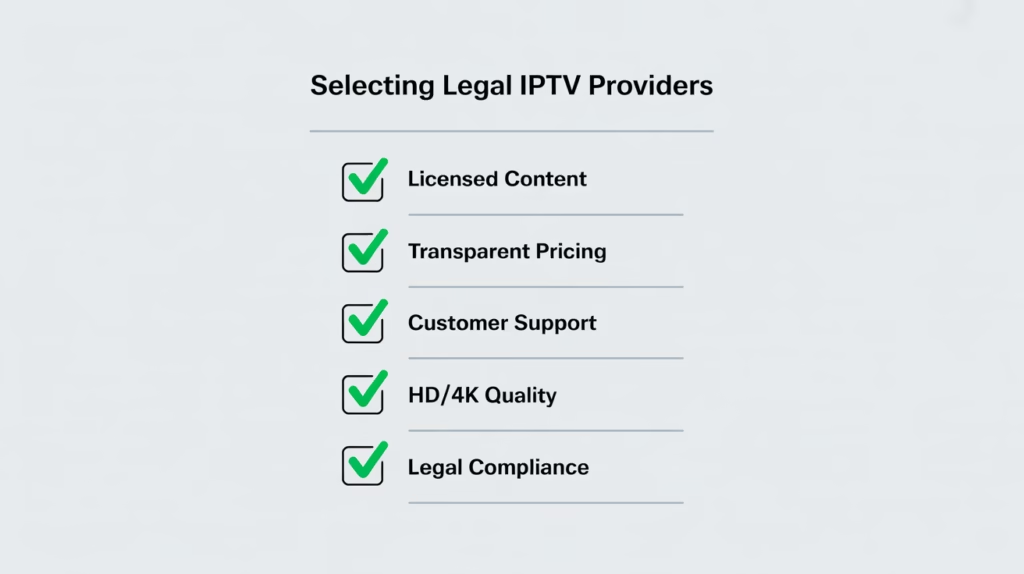
Here’s how to select safe and legal IPTV services:
✔ They do NOT stream stolen copyrighted channels
✔ They offer transparent monthly/yearly pricing
✔ They use reliable servers with low downtime
✔ They have real customer support
✔ They explain their content sourcing
✔ They don’t hide behind anonymous domains
✔ They offer free trials or refunds
✔ They accept normal payments (card, PayPal, etc.)
If a service hides everything, operates anonymously, or only accepts crypto → avoid it.
A clear, professional IPTV service is the safest choice. Finally if you’re thinking about selling IPTV, read our full guide on how to become an IPTV reseller safely and legally.
FAQ: Is IPTV Legal?
Is IPTV legal in the US?
Yes, as long as the provider distributes licensed content. Unauthorized IPTV streams are illegal.
Is IPTV legal in the UK?
Yes, but only when using licensed services. Illegal IPTV boxes and apps violate UK copyright rules.
Can I get in trouble for watching IPTV?
Most regions pursue the provider, not the viewer. But knowingly using illegal IPTV can still lead to legal issues depending on local laws.
How do I know if an IPTV provider is legal?
Look for transparency: clear pricing, real support, stable servers, legal content sourcing, and normal payment methods.
Final Conclusion: Choose IPTV Safely in 2025
The question “is IPTV legal?” has a simple answer:
👉 IPTV is legal when the provider has permission to stream the content.
It becomes illegal when the service distributes copyrighted material without authorization.
As long as you choose a transparent, trustworthy, licensed provider, you can enjoy IPTV with confidence and safety.
If you want a stable IPTV experience with professional support, transparent service, and high-quality streaming, you can always explore trusted options like InfoTVStream, where you get premium stability, fair pricing, and top tier customer care.
Stay informed. Stay safe. Enjoy IPTV the right way.


[…] To understand the legal side properly, read our full explanation here:👉 Is IPTV legal in your region? […]
[…] support. Enforcement actions often raise questions about compliance, which is why many users ask is IPTV legal in 2025 across different […]